
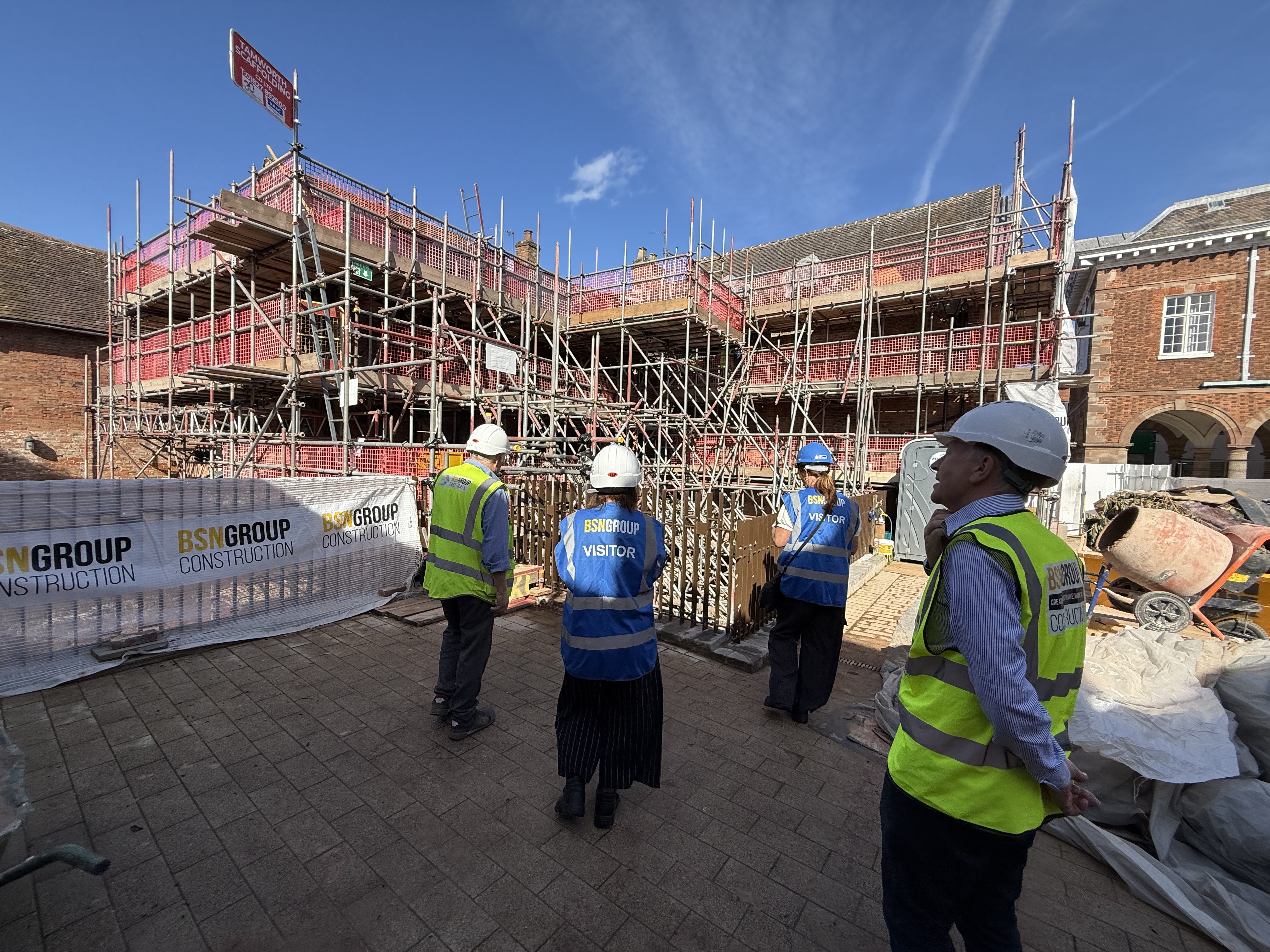
- Specialist restoration work is protecting three historic Market Street properties and securing their future
- Original wattle and daub dating back to around 1693 has been uncovered
- Ecological measures are protecting brown long-eared bats roosting within the buildings
Tamworth Borough Council is continuing its careful restoration of three historic properties on Market Street, with specialist heritage contractors BSN Group Construction carrying out complex structural and conservation work.
The Grade II listed buildings at 26a, 27 and 27a Market Street, next to Tamworth Castle, are being restored as part of the council’s wider programme to regenerate the town centre and protect its historic buildings for future generations.
The restoration is being carried out by BSN Group Construction, specialists in the conservation and repair of historic buildings, with experience working on important heritage projects for organisations including the National Trust and Historic England.
The work has already uncovered fascinating evidence of the buildings’ past, with a wealth of historic fabric, including sections of original wattle and daub construction hidden behind modern wall coverings.
Some of the building fabric dates to around 1693, giving an important insight into the history of the properties and how they have evolved over more than three centuries.
The age and construction of the buildings mean that the work requires a sensitive approach, with BSN assessing individual timbers to determine what can be retained and treated and what needs to be replaced. Specialist timber testing equipment is being used to measure the density of the wood and assess its structural integrity, helping to preserve as much of the original material as possible.
The properties have suffered significant timber decay over the years, with some timbers affected by woodworm and deathwatch beetle. Where replacement is needed, new materials are being carefully introduced. A major beam has been replaced with new oak, while new floor joists and sections of the timber frame are also being installed. While extensive internal and external propping is being used to support the buildings during the structural work.
One of the more significant challenges is a gable wall that is bowing outwards. This will need to be carefully taken down and rebuilt as part of the restoration.
The wider works include structural repairs, re-roofing, façade restoration and internal improvements to bring the buildings up to current safety standards. A new compliant stair tower will also replace the existing unsafe structure.
The conservation work is being carried out alongside ecological measures. Brown long-eared bats are known to roost within the roof space, with bat boxes installed and an established roost being retained within one of the beams. An ecologist attends the site regularly and is present when works are taking place in areas where bats could potentially be affected. This approach means the project is protecting both the historic character of the buildings and the wildlife that relies on them.
Councillor Carol Dean, Leader of Tamworth Borough Council, said “These buildings are an important part of Market Street and Tamworth’s historic character, and it is fantastic to see this specialist restoration work progressing.
“The discovery of original wattle and daub dating back to around 1693 gives us a fascinating glimpse into the history of these properties. It also demonstrates why this restoration requires such a careful and considered approach.
“The team is taking time to understand each building, retaining and treating historic materials wherever possible and only replacing them where it is necessary to make the buildings safe and structurally sound.
“We’re also making sure that wildlife is protected throughout the project, with specialist measures in place for the brown long-eared bats that roost within the buildings.
“There’s still a significant amount of work to do, but the progress so far is encouraging. We are investing in the future of these buildings while protecting the history and character that make this part of Market Street so special.”
The work forms part of Tamworth Borough Council’s wider regeneration programme for the town centre. Alongside addressing the significant structural and conservation challenges presented by the properties, the project is helping to safeguard an important part of Market Street’s historic character and create opportunities for the buildings to have a future use once the restoration work is complete, helping to bring these historic buildings back into the life of Tamworth.
Notes:
The Market Street restoration joins a list of key regeneration achievements across Tamworth, including:
- The Elizabeth Bradford Business Centre: A new enterprise centre in the original 19th Century former Co-operative building on Colehill.
- A wider footbridge into the castle grounds, to enhance the significance of the grade 1 listed castle, and the existing character and appearance of the conservation area.
- Redevelopment replicating the original Georgian style of the former Peel Café, bringing a building back into active use. (The new home to the Nationwide Building Society)
- Refurbished and paved St Editha's Square.
- Town Hall Place – a new flexible, multi-use building in Middle Entry, for seven independent small businesses.
- Public realm works linking all the projects together.
Additionally, South Staffordshire College opened its new college facility in September 2025. Together, Tamworth Borough Council's regeneration project and the new college deliver a combined investment of over £40million in Tamworth town centre.
Together, Tamworth Borough Council’s regeneration project and the new college deliver a combined investment of over £40million in the town centre.
For more information about the project and how it came about, please visit Transforming Tamworth | Tamworth Borough Council