
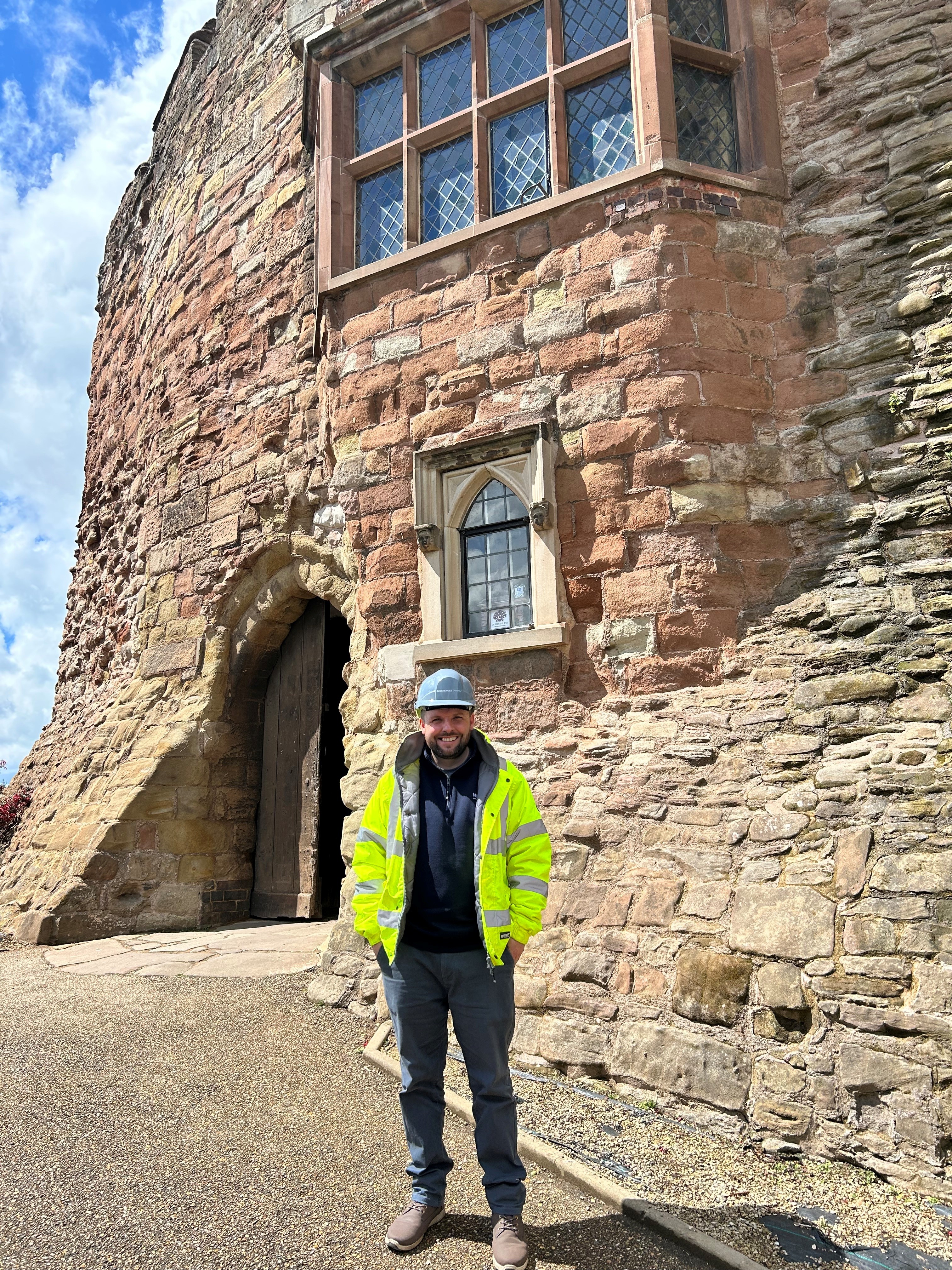
- Castle will remain open throughout complex restoration programme
- £1.9m project includes £1.7m from Arts Council England MEND Fund
- Work will replace old and cracked drainage systems under the castle
Tamworth Borough Council have commenced the biggest conservation project in the modern history of Tamworth Castle as part of ongoing work to protect this vital historic monument for future generations.
Specialist contractors have arrived on site to begin the complex £1.9m restoration, including repairing historic drainage systems, stabilising areas of structural movement, fixing deteriorating masonry and significant roof repairs on the south wing.
As well as protecting the fabric of this ancient building, the work will improve environmental conditions for the many important historic artefacts the castle houses, including items from the precious Staffordshire Hoard.
It will be carried out in carefully planned phases, allowing the castle to remain open throughout. Where possible, visitors will be given opportunities to witness and engage with the conservation work first-hand.
Supported by £1,716,238 from Arts Council England’s Museum Estate and Development Fund (MEND), and £190,695 from Tamworth Borough Council, the restoration is part of an ongoing commitment to care for the castle as its current custodians and ensure its 1,000-year legacy lives on.
One of the most significant elements of the project is repairing/replacing the drainage system which runs underneath the castle and into the motte. Detailed surveys in recent years have attributed some of the building’s subsidence issues to poor drainage.
Ancient pipes have broken due to age or damage from tree roots, resulting in some areas becoming waterlogged and others drying out, which is causing movement in the building.
Lead contractors, Messenger BCR, will lay new drainage systems, and repair some of the existing, which means digging into the floor and the motte.
Every phase of the work will be overseen by an archaeologist and monitored closely by Historic England to ensure it’s carried out in accordance with rules and regulations for conserving historic buildings.
Archaeologist Will Mitchell of the University of Huddersfield has been on site as contractors drilled test holes along the proposed route of the new drainage system through the kitchen. This was to make sure anything of historical significance was identified and recorded.
Will, who has been involved with Tamworth Borough Council on various projects for around six years, said: “Any significant construction work on a special building has to have an archaeological input and presence, and then be signed off by Historic England. There’s so much that goes into maintaining the castle that people don’t always see.
“I love Tamworth Castle; it has so much potential and a really good future. It’s a really important asset for Tamworth, but also the country, because it has so many links to specific periods of time, such as the Anglo Saxons and the Normans, and it’s quite unique in terms of its preservation.”
This first phase of drainage works is expected to last around three months and will mean the Townshend Room being closed to visitors, along with a corridor that links it to the kitchen. The rest of the castle will remain largely open, although various repairs will take place at times throughout. People are encouraged to visit as usual and ask questions about the restoration. There will also be opportunities to get involved and see conservation in action as the project progresses.
Residents will soon see activity on the outside of the castle as scaffolding will be erected on the motte and around some of the walkway at the top. This is to provide access for workers and materials, and for repairs on the outside of the building.
Sections of the path around the castle at the top of the motte will therefore be closed for the majority of the programme.
Overall, the work is expected to last around 18 months, although timescales are harder to predict when dealing with such a unique and complex building that has been shaped by centuries of families.
The man in charge of the task is Messenger BCR project manager, Martin Nee, who happens to be Tamworth born and bred, and grew up visiting the castle and playing in its grounds.
Martin said leading this project on his home castle brings a real sense of pride, and also responsibility: “I never could have imagined when visiting the castle on a school trip that I would one day be in charge of the biggest restoration in its modern history.
“We’re used to working on specialist buildings, but this is a live castle on top of a mound, with additional logistics and access challenges, and it’s staying open throughout, so a lot of planning goes into it.
“We’re sourcing local trades where we can and will be looking for opportunities for community involvement and apprenticeships. I’m really excited to be working here.”
The next phase will involve putting a brand new timber roof on part of the building.
Tamworth Castle has stood at the heart of the town for almost 1,000 years. From its origins as a Norman motte-and-bailey fortress to a medieval stronghold, a gentry residence and finally a public museum, it has evolved continuously throughout the centuries.
Over time, the building has been shaped by layers of adaptation, as well as the effects of weather, climate change, structural movement, usage and time.
It was placed on the Heritage at Risk Register in December 2023, helping to highlight its national significance and unlock the detailed investigations that led to the successful MEND funding bid.
Thanks to that funding, the deeper structural problems that are causing visible issues on the surface can now be addressed.
Stephen Gabriel, Chief Executive of Tamworth Borough Council said: "Tamworth Castle sits at the very heart of our town and is an important part of our heritage. As its current custodians, we have a responsibility to protect it. Addressing the deeper structural issues now means we can safeguard the building, protect its collections, and ensure the castle continues to be a place people can visit, explore and enjoy for generations to come.
“We are grateful to Arts Council England for their significant investment through the MEND Fund, and proud that the council is playing its part in securing its future. I would encourage residents to come and see the conservation work for themselves."
Updates on the restoration will be shared as work progresses. For more information and to follow the journey, visit: www.tamworthcastle.co.uk/caring-castle
Notes to editors:
More details about MEND grants can be found here: Museum Estate and Development Fund (MEND) Round 4 | Arts Council England.